How often do Japanese people eat sushi rolls?


Like so many others, the Japanese live a busy life. They work 10-15 hours a day. They often eat food on the way home from work or they buy take-away food on the road.

In Japan, sushi rolls are often ordered as take-away food on the way home from work. In Japan, you can buy sushi rolls in several different sizes.

Japanese sushi rolls taste different than those that can be bought in Europe. Local Japanese ingredients are used to make sushi rolls.

When making sushi rolls in Japan, no topping or mayonnaise is used, the Japanese customers prefer the taste of fresh ingredients.

In the Sushi course for beginners, you learn step by step how to make tasty sushi rolls, as they are made at sushi restaurants in Tokyo.

_
Zoë has lectured and held sushi courses for A. P. Moller – Maersk, Hugo Boss Nordic, Novo Nordisk, Novartis, Velux, Gorrissen Federspiel, Beierholm revision, Elbek & Vejrup and many more.
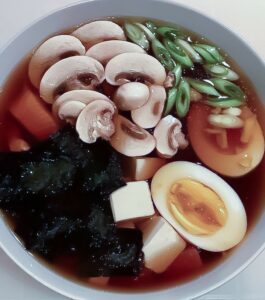
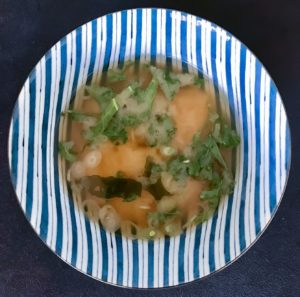
Japanese noodle soup for cold and rainy days!

Noodle soup
Lately it has been raining a lot in Denmark. The temperature has dropped above minus degrees and instead of snow we get lots of rain. The weather is most reminiscent of autumn weather.

Winter and spring months are perfect for warm, satisfying soups and boost the body with healthy vitamins and minerals.
One of the countries that specialized in filling soups that fit into a busy everyday life is Japan. Most people have heard of the classic ramen soup, which warms right up to the bones and gray everyday life.

Ramen soup is not the only soup that the Japanese enjoy all year round. There are several different types of noodle soups. Soups made with different types of stock, noodles and vegetables.
In Japan, you will not find restaurants that make the same noodle soup. There are many eateries that have developed their own soups from scratch, while others make soups that have been passed down from generation to generation.

On the noodle soup course for beginners, you learn step by step how to make 2 very different Japanese noodle soups from scratch. Soups that taste exactly the same as they are served in restaurants in Japan and not in Denmark.

Read more about Noodle soup course for beginners

_
Zoë has lectured and held sushi courses for A. P. Moller – Maersk, Hugo Boss Nordic, Novo Nordisk, Novartis, Velux, Gorrissen Federspiel, Beierholm revision, Elbek & Vejrup and many more.
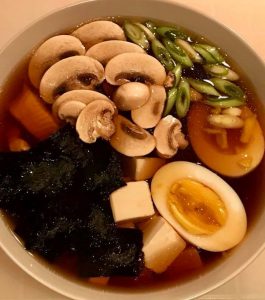
How much miso do the Japanese eat?

The Japanese eat a lot of miso. It is part of Japanese cuisine just like pasta is, in Italian cuisine.

Miso contains soybeans, sake, water and a sponge.
This mixture is allowed to ferment for a period of time. The length of the period is very different it depends on what kind of miso to make.

There are several different kinds of miso pasta of different strengths and flavors, a bit like cheese. The mild miso pastas are light and relatively mild in taste.
The slightly stronger and stronger miso paste has been fermenting for a long time. The color of miso paste is darker and, partly the taste is much more intense, has deep and seems more spicy in taste.

Miso contains many vitamins, minerals and has a detoxifying effect on the body, which is why miso is eaten every day in Japan.

Read more about 14 days of Okinawa miso soup – Superfood

_
Zoë has lectured and held sushi courses for A. P. Moller – Maersk, Hugo Boss Nordic, Novo Nordisk, Novartis, Velux, Gorrissen Federspiel, Beierholm revision, Elbek & Vejrup and many more.
In what way does Japanese cuisine differ from the rest of the world?

Okinawa Miso Soup - Super Food
Japanese cuisine is quite unique in several different ways.
It is almost tailored to those who are interested in health and what is good for the body without compromising on taste. Japanese cuisine is put together in such a way that it either detoxifies or nourishes the body.

Yep, that is true. The Japanese are very conscious about what they eat. This is one of the main reasons why the Japanese are the people in the world who live the longest.

Going all-in and eating like the Japanese is hard.
The Japanese have a completely different view of diet and, their diet pyramid looks very different. A classic Japanese meal often consists of 10-12 small dishes. Dishes that contain fish, meat, vegetables and soybeans prepared in several different ways.

The Japanese are good at boosting health in small ways. Here I also think about what they drink during the day.

Miso or fermented soybeans are a regular part of Japanese cuisine. It is a raw material that is not to be missed. It is super food that in the right contexts boosts health. I know that most people live a busy life, but at the same time have a desire to live a healthy life.

For them, I have put together a 14-day course where you boost your health with healthy and nutritious soups. It is a process that matches a busy everyday life.

Read more about 14-day Okinawa miso soup – super food

_
Zoë has lectured and held sushi courses for A. P. Moller – Maersk, Hugo Boss Nordic, Novo Nordisk, Novartis, Velux, Gorrissen Federspiel, Beierholm revision, Elbek & Vejrup and many more.

How many different types of noodles are there in Japan?


The Japanese are the population in the world that eats the most noodles.

There are many different gastronomic styles within noodles. Common to them all is that they are suitable for a busy workday.

Yep, the Japanese are just as busy as everyone else. They just do not want to compromise on their health. What I mean is that even though they are thunderously busy, their fast food must still be healthy.

In Japan, there are 8 different kinds of noodles.

Most noodles are made on wheat or buckwheat though, with the exception of one which is made on konnyaku.

On the noodle soup course for beginners, you will learn how to make 2 different tasty noodle soups as they are served at restaurants in Tokyo. You can read more about the course here.

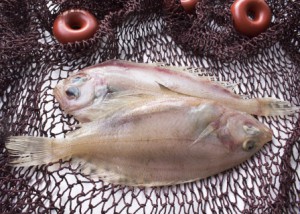
Is there a big difference in the quality of fish?

Yes it is there.

There is a big difference in quality compared to whether it is a fish that you have to cook or whether it is a fish that is to be used for sushi.

Does it matter?

No, it’s not.

One of the criteria is that a fish must be as fresh as possible. If the fish is not fresh enough then you can risk getting sick.

In addition, it is also important where the fish has grown up. There are some areas in the world’s oceans that have just the right conditions in terms of the quality demanded for sushi.

At the Sushi course for beginners, you will learn what questions to ask a fishmonger when buying fish for sushi

_
Zoë has lectured and held sushi courses for A. P. Moller – Maersk, Hugo Boss Nordic, Novo Nordisk, Novartis, Velux, Gorrissen Federspiel, Beierholm revision, Elbek & Vejrup and many more.

That’s why the quality of Japanese gastronomy in Tokyo is so high!

Over the past few years more and more people have become aware that Tokyo is the city with the most Michelin stars.

In general, the food and especially high-quality food is very important to Japanese people. I see that as soon as I arrive in Tokyo.

Japanese schools have a food scheme that makes very high quality organic food for the children. The classes with youngest students the food that they are having for lunch is part of the lesson.

Before the kids are allowed to go for lunch the class teachers review the menu with the school children. The children learn about the different ingredients that are included in the food. The children do also learn about the nutritional content of the various dishes.

Teaching children about healthy food and give healthy food for lunch the children gets healthy diets. It helps fight overweight children and future lifestyle diseases.

Read more about Sushi chef & sake sommelier Zoë Escher

_
Zoë has held sushi courses and cooking classes for A. P. Moller – Maersk, Hugo Boss Nordic, Novo Nordisk, Novartis, Velux, Gorrissen Federspiel, Beierholm revision, Elbek & Vejrup and many more.

Shabu Shabu is a classic Japanese pot dish, which is eaten year-round in Japan

A healthy and tasty dish, which is typically enjoyed for several hours. A large pot with water and a piece of Kombu seaweed is set to boil and as the water boils you add various vegetables, meat in the pot, which is cooked in a few minutes.

The pieces are then taken out of the pot and eaten by dipping the pieces in different sauce.

Most restaurants offer thin-quality beef slices ranging from classic meat to wagyu. It is a dish, which I enjoy when I am in Japan or USA.

Read more about Sushi chef & sake sommelier Zoë Escher

_
Zoë has lectured and held sushi courses for A. P. Moller – Maersk, Hugo Boss Nordic, Novo Nordisk, Novartis, Velux, Gorrissen Federspiel, Beierholm revision, Elbek & Vejrup and many more.

Why are the Japanese the world’s longest living?

The Japanese cuisine is very different from the rest of the world.
The dish is combined in such a way that it either charges the body or adds to the body’s nourishment.
Chips, fries and other high fat foods are not included as a natural part of Japanese cuisine. Just like so many others, the Japanese also want a snack. However, the Japanese prefer to eat something healthy when want something sweet to eat. They prefer to eat dried squid, dried raises and fish.

In comparison to cake and other sweet stuff, rice and beans are included in many Japanese desserts. Desserts do not have to get ‘boring’ for that reason.

On the course Traditional Japanese cooking class for beginners you learn to make tasty dishes suitable for parties and everyday life.

_
Zoë has held sushi courses and cooking classes for A. P. Moller – Maersk, Hugo Boss Nordic, Novo Nordisk, Novartis, Velux, Gorrissen Federspiel, Beierholm revision, Elbek & Vejrup and many more.

The reason why Japanese cuisine has become so popular in Europe


There is still some people who believe that sushi is the dish that the Japanese eat the most in Tokyo.
The Japanese are flove sushi but sushi accounts for less than 15% of Japanese cuisine.

Japanese cuisine differs from other kitchens.
The Japanese cuisine consists of many different styles, such as noodle soups, stews, vegetarian dishes, dishes where fish or meat is cooked.

Common to all the dishes is that you use different raw materials in the Japanese kitchen which either detox the body or provide the body with nutrition.
A Japanese dinner will often consist of many small dishes that embrace the entire cost pyramid.

On the course Traditional Japanese cooking class for beginners the attendance learn how to cook tasty and healthy dishes by using different Japanese cooking techniques in the preparation of the dishes.

_
Zoë has held sushi courses and cooking classes for A. P. Moller – Maersk, Hugo Boss Nordic, Novo Nordisk, Novartis, Velux, Gorrissen Federspiel, Beierholm revision, Elbek & Vejrup and many more.