November and December are some pleasant and wonderful months that offer many events and gatherings. There are lots of lovely food, dinners, cakes, cookies, Christmas and fun with family, friends, leisure interests and gatherings at work.
For most people including myself, the month of January is a good time to just take a break. I mean that I enjoy to focus on low-fat Japanese dishes with lots of vegetables, so that the body gets an extra shot of vitamins and minerals at the same time that I prevent colds and flu, which have good conditions in the winter months.
However, I prefer to eat low-fat Japanese dishes, which are not boring or where the good taste has disappeared that makes it easier to lose a little extra, which I have gained seat during the Christmas months.
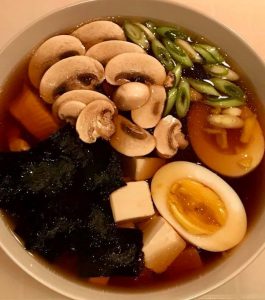
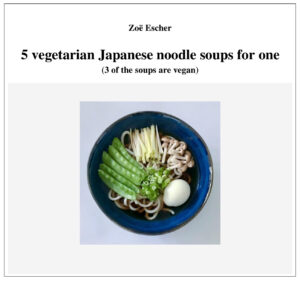
I have received a few request about what I eat in the winter months and the Japanese dishes I would like to share. It has become an e-book “5 vegetarian Japanese noodle soups for one” price DKK 85.
Click here to read more about the ebook 5 vegetarian Japanese noodle soups for one
_
Zoë has lectured and held sushi courses for A. P. Moller – Maersk, Hugo Boss Nordic, Novo Nordisk, Novartis, Velux, Gorrissen Federspiel, Beierholm revision, Elbek & Vejrup and many more.