What type of salmon is used in the Sushi course for beginners?

Salmon

In our Beginner Sushi Course, we use some of the finest salmon in the world – salmon from the Faroe Islands.

I have the opportunity to source Faroese salmon, which is considered by many to be among the best sushi grade salmon available. The fish is raised under optimal conditions in the cold, clean waters of the North Atlantic, resulting in exceptional taste and quality. That is why I have chosen it as one of the key ingredients used in the course.

I do this for two reasons:

  1. When I make sushi both at my public courses and private events, I always use the best ingredients I can source. Quite simply, it provides the best flavour experience.
  2. My students deserve the very best. High-quality ingredients also give participants a greater understanding of how important ingredient quality is to the taste and overall sushi experience. It is also part of ensuring that everyone can safely enjoy the sushi we prepare during the course.

The Beginner Sushi Course is an exciting and educational experience where you will learn about:

  • choosing the right ingredients
  • cooking sushi rice
  • knife and cutting techniques
  • Japanese ingredients
  • buying fish
  • the methods behind delicious sushi

After the course, you will be ready to create delicate and delicious sushi in your own kitchen.

Read more about Sushi course for beginners
_
Zoë has held sushi courses and cooking classes for A. P. Moller – Maersk, Hugo Boss Nordic, Novo Nordisk, Novartis, Velux, Gorrissen Federspiel, Beierholm revision, Elbek & Vejrup and many more.
When is pink sea bream eaten in Japan?

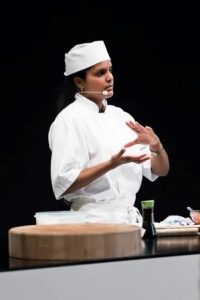
Sushi chef & sake sommerlier Zoë Escher
In Japan, pink sea bream or Sakura-Dai is a seasonal fish that is often eaten in the spring.

It is especially popular when the cherry trees are in bloom, which usually happens in late March to April, depending on the region.
This is a time when Japanese restaurants and homes often serve Sakura-Dai, a delicacy that perfectly matches the festive mood and beauty of the cherry blossoms. So if you want to taste this delicate fish, spring is the best time of the year to do it.

The fish’s pink color and mild taste make it suitable for a wide range of dishes.
Sakura-Dai is often used for sushi and sashimi, where its delicate flavor and fine texture can be fully enjoyed. It can also be grilled, steamed or fried, and served as a main course with rice and vegetables.

Sometimes it is also prepared in a clear soup or included in various stews. No matter how it is prepared, Sakura-Dai adds a subtle flavor and a nice color to any meal.

Read more about Sushi course for beginners

_
Zoë has held sushi courses and cooking classes for A. P. Moller – Maersk, Hugo Boss Nordic, Novo Nordisk, Novartis, Velux, Gorrissen Federspiel, Beierholm revision, Elbek & Vejrup and many more.

Learn how to make the world’s most beautiful fast food ramen noodles in 15 minutes

Just 14 days ago I came home from LA.

Although LA offers sun, summer and glitter it is also nice to be back in Denmark and enjoy the autumn colors.

Last weekend in Copenhagen it rained almost continuously for almost 2 days. Although it was raining crazy there is now something nice about it.

It’s time to find the big wool socks, warm blankets and hot to drink and eat.

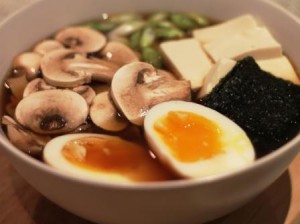
On a cold rainy autumn day there is nothing better than a bowl of hot ramen noodle soup made from scratch. I prefer noodle soups that taste exactly the same way you get served in Tokyo restaurants.

Noodle soups that are healthy, nutritious and suitable for a busy everyday life.

Since I am not the only one who loves Japanese noodle soups, I have set up a few classes over the autumn / winter where you as an attendance learn about which Japanese ingredients are best for noodle soup. You will also learn how to use different cutting techniques and step by step make tasty ramen soup as it tastes in Tokyo.

Read more about the Noodle soup course for beginners

_
Zoë has held sushi courses and cooking classes for A. P. Moller – Maersk, Hugo Boss Nordic, Novo Nordisk, Novartis, Velux, Gorrissen Federspiel, Beierholm revision, Elbek & Vejrup and many more.

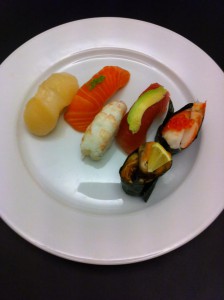
What is the difference between European and Japanese nigiri?

There is a big difference between European and Japanese nigiri. This is because there is a big difference between the education that European and Japanese sushi chefs go through.

In Japan, Japanese sushi chefs have been working as a sushi chef for 60 years and uses techniques that take 40 years to master. I am talking techniques you use to boiling rice, cutting fish and making sushi.

The selection of seafood used for sushi is very large in Japan. Often you will find 20 different species on the menu. It is one of the reasons why it takes longer to become a sushi chef in Japan. As a chef you must have a great knowledge of many different types of fish.

Read more about Sushi Chef & Sake Sommelier Zoë Escher

_
Zoë has lectured and held sushi courses for A. P. Moller – Maersk, Hugo Boss Nordic, Novo Nordisk, Novartis, Velux, Gorrissen Federspiel, Beierholm revision, Elbek & Vejrup and many more.