
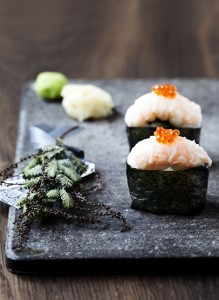
Yes, sushi seaweed can taste quite different depending on the type. This can make a difference to your sushi experience.
Sushi seaweed, also known as nori, is produced in countries such as Japan, Korea, and China.
There are different types and qualities of nori. They vary in flavor, texture, and consistency. These differences affect how the seaweed behaves when making sushi and how it feels when you eat it.
I have personally tasted sushi seaweed from Japan, Korea, and China. In my experience, there are clear differences.
Some types of seaweed have a strong taste of the ocean. This can be a little surprising if you are not used to eating seaweed. The flavor can be stronger or milder depending on the type.
Other types of seaweed have a very mild and almost neutral flavor. This can be an advantage when making sushi. The seaweed does not overpower the flavors of the fish, rice, and vegetables.
The texture can also be different. Some nori sheets become slightly chewy or rubbery after the sushi rolls are made. This creates a different sensation when you bite into a piece of sushi.
Seaweed contains several important nutrients. It can be a healthy addition to a balanced diet.
Learn more about my Sushi Course for Beginners, where you will learn how to make delicious sushi from scratch.
_
Zoë has lectured and held sushi courses for A. P. Moller – Maersk, Hugo Boss Nordic, Novo Nordisk, Novartis, Velux, Gorrissen Federspiel, Beierholm revision, Elbek & Vejrup and many more.