What Scandinavian fish do the Japanese love?


Yep, it’s good enough.
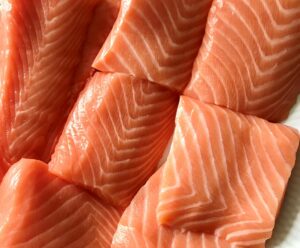
There is a fish species in Scandinavia which is imported to Japan. It is the fish that most people in Denmark like, namely salmon.

In Scandinavia, the selection of high quality salmon is very large freshly caught salmon from the Faroe Islands and Norway land daily in Denmark and wild salmon from Iceland on a regular basis.
The salmon is of such a good quality that Japanese fish importers have visited Scandinavia to take a closer look at the fish.

Salmon is a fish that is not found in the wild in Japan. It is a tropical climate in the latitudes where completely different fish species thrive and which are not available in Denmark.

The Scandinavian salmon is very popular in Japan and, found in the refrigerated counter at supermarkets throughout the country.

At the Sushi course for beginners, you learn how to make delicious and tasty sushi with the coveted Faroese salmon. Of course, it is not just any Faroese salmon it is the best in the world.

Read more about Sushi course for beginners

_
Zoë has lectured and held sushi courses for A. P. Moller – Maersk, Hugo Boss Nordic, Novo Nordisk, Novartis, Velux, Gorrissen Federspiel, Beierholm revision, Elbek & Vejrup and many more.

Which fish is most in demand for sushi in Scandinavia?

Salmon

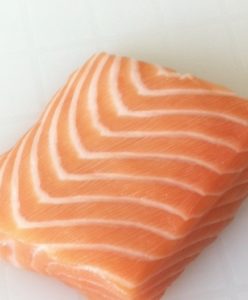
In Scandinavia, salmon is the most sought fish for sushi.
Salmon is a local fish that lives in Denmark, Norway, Sweden, the Faroe Islands, Iceland and Finland. The quality of salmon in Scandinavia is very good.

The Faroe Islands are known for producing the world’s best salmon.
Faroese salmon are farmed in the sea, where they grow under the best possible conditions. The salmon also gets fantastic feed, which gives the tasty salmon steaks.

The other Nordic countries also produce very fine, high-quality salmon. In Scandinavia, salmon is produced in large quantities. Freshly caught salmon come to Denmark every single day.

For consumers, it is wonderfully easy to get hold of the fresh, tasty and delicious salmon at the many fish shops in Denmark.

In the Japanese sushi course for beginners, you will learn the salmon that are best suited for sushi-

_
Zoë has lectured and held sushi courses for A. P. Moller – Maersk, Hugo Boss Nordic, Novo Nordisk, Novartis, Velux, Gorrissen Federspiel, Beierholm revision, Elbek & Vejrup and many more.

What type of salmon is used in the Sushi course?

The sushi course uses the best salmon in the world, which comes from the Faroe Islands.

I have the opportunity to buy Faroese salmon that has been raised under the best conditions. I have chosen it as one of the ingredients for the course.

I do this for two reasons.

  1. When I make sushi, whether for others or at home, I use the best ingredients I can get. It simply results in the best flavor.
  2. My participants deserve the best. They gain a greater understanding of how much the quality of the ingredients impacts the taste of the sushi. It is also my guarantee that none of the attendees will get sick.

The Sushi course for beginners is a wonderful course because you will learn about ingredients, how to cook rice, cutting techniques, Japanese ingredients, buying fish, and the methods used behind delicious sushi.

After completing the course, you will be ready to make delicate and tasty sushi in your own kitchen.

Read more about the cooking class  Sushi for beginners
_
Zoë has held sushi courses and cooking classes for A. P. Moller – Maersk, Hugo Boss Nordic, Novo Nordisk, Novartis, Velux, Gorrissen Federspiel, Beierholm revision, Elbek & Vejrup and many more.
Do all restaurants in Japan use the real Japanese wasabi?


I have been traveling to Japan since 2004 to broaden my horizons and, learning new things from my Japanese teacher. Under normal circumstances, I travel to the Japan every year and on my many trips, I have had many gastronomic experiences ranging from everyday sushi to 2 star Michelin restaurants.

Real wasabi is widespread in Japan. However, not all restaurants use the real wasabi, even in Japan. Usually only Michelin sushi restaurants use the real wasabi.

I have tasted the real wasabi several times in Japan and, I cannot taste the difference. The strong taste disappears a little faster when it comes to the real wasabi.

Wasabi is a horseradish that grows in Japan. It has difficulty growing outside of Japan and therefore artificial wasabi is used. In Denmark, artificial wasabi is widespread it is only a few restaurants that import wasabi from abroad.

Read more about Sushi course for beginners

_
Zoë has lectured and held sushi courses for A. P. Moller – Maersk, Hugo Boss Nordic, Novo Nordisk, Novartis, Velux, Gorrissen Federspiel, Beierholm revision, Elbek & Vejrup and many more.
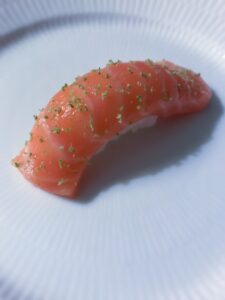
What is Japanese gyoza?


Japanese gyoza are in fact Japanese dumpings.

Originally, Japanese gyoza comes from China. China is known for making many different kinds of dumplings with fish, meat, seafood or a combination of it all.

When the Chinese dumplings came to Japan many years ago, the Chinese dumplings were adapted to Japanese cuisine. Other raw materials were used. The dough sheets used to make Japanese gyoza are made with classic ingredients used in Japanese cuisine.

Japanese chefs made their own interpretation of gyoza. It became like a banner bearer for all other gyoza that have since come into being. The Japanese chefs also developed their very own hand techniques used to fold the Japanese gyoza.

The actual preparation of gyoza is another. A gyoza must go through several steps before it is ready to be eaten.

In the Traditional Japanese food course for beginners, you will learn how to make gyoza as they are served in restaurants in Tokyo.

_
Zoë has lectured and held sushi courses for A. P. Moller – Maersk, Hugo Boss Nordic, Novo Nordisk, Novartis, Velux, Gorrissen Federspiel, Beierholm revision, Elbek & Vejrup and many more.
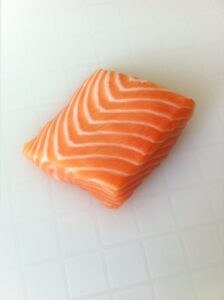
Authentic Japanese Teriyaki sauce which you can eat with a spoon

Teriyaki sauce has become a popular addition to many Asian dishes, and most people know it as the bottled version found in supermarkets and Asian specialty stores.

However, the homemade, authentic Japanese teriyaki sauce is a completely different experience. It’s rich, well-balanced, and so full of flavor that many of our course participants cannot resist taking a spoonful straight from the pot the first time they taste it.

In our Traditional Japanese Cooking Class for Beginners, participants learn how to prepare three classic Japanese dishes entirely from scratch. One of the favorites is teriyaki salmon a dish that brings out the delicate aromas and depth of flavor in the salmon. The silky-smooth teriyaki sauce adds the final touch, elevating the dish to something truly special and making the taste buds sing.

Read more about Traditional Japanese cooking class for beginners

_
Zoë has held sushi courses and cooking classes for A. P. Moller – Maersk, Hugo Boss Nordic, Novo Nordisk, Novartis, Velux, Gorrissen Federspiel, Beierholm revision, Elbek & Vejrup and many more.
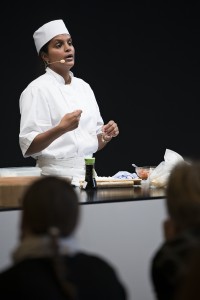
How much salmon is eaten in Japan?

Salmon
Salmon is a fish that lives in Scandinavia.
The climate in Japan is tropical which means different type of fish is living at those latitudes.

One of the fish that lives naturally in the oceans around Japan is the tuna. Tuna has been and still is one of the Japanese’s favorite fish for centuries. The tuna is having a hard time. The demand for tuna is very high, but there are quotas for how many can be caught per year.

In Japan, the interest in salmon has been steadily rising.
In 2017, Scandinavian salmon filled refrigerated display cases in local Japanese supermarkets. The Scandinavian salmon is of such good quality that Japanese fish buyers visit Denmark and other countries to assess the quality of salmon.

Among Japanese children and adults, salmon has become a sought-after fish. It is a fish that are suitable for many different types of dishes. Some prefer to eat raw salmon, while others enjoy cooking the salmon on a pan or in the oven. The possibilities are many.

At Traditional Japanese food course for beginners and Sushi course for beginners, you will learn how to make tasty dishes with salmon.

_
Zoë has lectured and held sushi courses for A. P. Moller – Maersk, Hugo Boss Nordic, Novo Nordisk, Novartis, Velux, Gorrissen Federspiel, Beierholm revision, Elbek & Vejrup and many more.

How many different kinds of salmon are there in Scandinavia?


In Scandinavia there are several different kinds of salmon.

We are so lucky to be surrounded by countries that have the best salmon in the world. Fantastic tasty salmon that comes to Denmark several times a week.

Norway is one of the countries that farms salmon on land. It is salmon of really good quality the Norwegians have mastered some of the challenges involved in farming salmon on land.

Most people have heard of salmon from Faroe Islands. The Faroese farm the best salmon in the world. All salmon from the Faroe Islands are farmed in the sea it gives salmon of a completely different quality.

Iceland also farms salmon. Not many people know about this. Icelanders have created an environment that is identical to Icelandic nature. You can buy farmed Icelandic salmon that has the same quality as those that live in the wild. Salmon from Iceland do not come to Denmark that often. At present it must be ordered.

Read more about Sushi course for beginners

_
Zoë has lectured and held sushi courses for A. P. Moller – Maersk, Hugo Boss Nordic, Novo Nordisk, Novartis, Velux, Gorrissen Federspiel, Beierholm revision, Elbek & Vejrup and many more.

What is teriyaki salmon?

Sushi chef & sake sommerlier Zoë Escher

Teriyaki is a Japanese cooking method where foods, such as fish or meat, are marinated and later brushed with a glazed sauce before being cooked by frying. The word ‘teriyaki’ is derived from ‘teri’, which refers to the shiny from the glazed sauce, and ‘yaki’, which means frying or grilling in Japanese.

The sauce is the heart of this dish. It is a sauce that is made from scratch and is a thick. The shiny sauce clings to the food and provides a sweet and salty balance.

Salmon, with its rich texture and mild taste, is an ideal fish for teriyaki. Salmon and teriyaki are best friends.
Teriyaki salmon is a delicacy that combines the best of the Japanese culinary world.
With its shiny sheen and deep flavor, it is a dish that will impress both guests and your own taste buds.

Do you want to join the year’s only cooking course, where you learn to make tasty dishes from classic Japanese cuisine?

In the Traditional Japanese Cooking Course for Beginners, you will learn step by step how to make this delicious dish with salmon.

_
Zoë has held sushi courses and cooking classes for A. P. Moller – Maersk, Hugo Boss Nordic, Novo Nordisk, Novartis, Velux, Gorrissen Federspiel, Beierholm revision, Elbek & Vejrup and many more.

From which country does the world’s best salmon come?

Salmon

All countries in Scandinavia have tasty salmon.
At the moment, the salmon comes primarily from Norway, Iceland and the Faroe Islands. Some salmon are better than others.

As a sushi chef, I am very particular about the quality of fish, only the best is good enough.
I use only the best fish when I hold Sushi course and Japanese cooking course. It tastes the best, but it also minimizes the risk of diseases.

The Faroe Islands are the country in the world that has the best salmon.
Salmon that have lived in the sea under the best conditions and that have had the best food throughout their upbringing.

This particular salmon is used when we make the popular Japanese dish teriyaki salmon from scratch on the course Traditionel Japanese cooking class for beginners.

Read more about the course Traditional Japanese cooking class for beginners

_
Zoë has held sushi courses and cooking classes for A. P. Moller – Maersk, Hugo Boss Nordic, Novo Nordisk, Novartis, Velux, Gorrissen Federspiel, Beierholm revision, Elbek & Vejrup and many more.