
Which vegetables are used in sushi rolls in Tokyo?

Sushi chef & sake sommerlier Zoë Escher
Tokyo is known as one of the world’s leading food capitals, and sushi naturally plays a central role in the city’s culinary culture. When it comes to sushi rolls, a variety of vegetables are used to create the perfect balance of flavor, texture, and presentation.

Among the most popular ingredients are shiitake mushrooms. These flavorful mushrooms have a rich, umami-packed taste that pairs beautifully with sushi rice and nori seaweed. Shiitake mushrooms are often simmered in a lightly sweet and savory marinade, giving them a tender texture and a deep, satisfying flavor.

Another classic ingredient is pickled plum, also known as umeboshi. Its tangy and slightly salty taste provides a refreshing contrast to the other ingredients in a sushi roll. Umeboshi is especially popular in vegetarian sushi varieties, where it adds both flavor and an authentic Japanese touch.

While cucumber, avocado, and pickled daikon radish are also commonly used, shiitake mushrooms and pickled plum are particularly associated with traditional Japanese sushi flavors. These ingredients reflect Japan’s appreciation for natural ingredients and carefully balanced taste combinations.

To learn more about Sushi course for beginners, explore the most popular ingredients used in sushi across the Nordic countries and discover how local preferences have influenced this beloved Japanese dish.

_
Zoë has held sushi courses and cooking classes for A. P. Moller – Maersk, Hugo Boss Nordic, Novo Nordisk, Novartis, Capgemini, Gorrissen Federspiel, Beierholm revision, Elbek & Vejrup and many more.

Why Japanese Knife Technique Is Truly Unique

Sushi chef & sake sommerlier Zoë Escher
Japanese knife technique differs greatly from the way many people are used to working with a knife. It is not about speed, but about precision, calmness, and control.
Every cut has a purpose, and the knife is used as an active tool to preserve the structure of the ingredient and highlight both its silky texture and flavor.

In Japanese cooking, the cut itself is an integral part of the preparation.
When an ingredient is cut correctly, its juices and texture are preserved, resulting in a cleaner, more balanced taste. This is why long, continuous movements are used instead of short, sawing motions. The sharpness of the knife does the work, producing a clean and uniform cut.

The technique is also about respect for the ingredient. Fish, vegetables, and other ingredients require different cuts, angles, and levels of pressure, and this understanding lies at the heart of Japanese culinary culture. When knife work is done correctly, the natural qualities of the ingredient are enhanced rather than damaged.

Japanese knife technique is therefore not merely a skill, but a craft that brings calm into the kitchen and elevates both presentation and flavor. It is the attention to detail in every cut that makes the difference and what makes Japanese knife technique truly special.

Read more about Sushi Course for Beginners

_
Zoë has held sushi courses and cooking classes for A. P. Moller – Maersk, Hugo Boss Nordic, Novo Nordisk, Novartis, Capgemini, Gorrissen Federspiel, Beierholm revision, Elbek & Vejrup and many more.

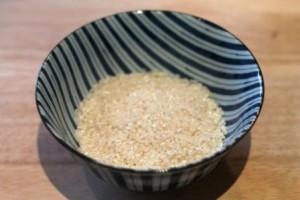
Is there a difference in the type of sushi rice?

SushirisYes, there may be big differences in the type of sushi rice.
Most people would probably think that the quality is not as crucial.
Like so much else the quality of sushi rice how just as much impact on how tasty your rice will be.
There is a big difference how many times you need to wash the sushi rice, how much water you must use and how long you should cook the rice. The cheaper rice you use the harder it make good sushi rice.

It’s worth spending a little extra money on buying rice of good quality.

You can read more about sushi course for beginners 

_
Zoë has lectured and held sushi courses for A. P. Moller – Maersk, Hugo Boss Nordic, Novo Nordisk, Novartis, Velux, Gorrissen Federspiel, Beierholm revision, Elbek & Vejrup and many more.

Gem