Why gyudon is One of Japan’s most beloved everyday dishes

Mini e-book: 5 Japanese gyudon for one
Japan is known for its wide variety of noodles, sushi, and street food, but one of the dishes that Japanese people return to time and time again is gyudon.

During my many trips to Japan, I have eaten gyudon countless times and have become fascinated by how a dish made with relatively few ingredients can create so much flavor. The combination of rice, tender meat, vegetables, and an umami-rich sauce has made gyudon one of Japan’s most popular everyday meals.

What makes gyudon so special is that it can be both simple and highly versatile. Small changes in ingredients, toppings, and cooking techniques can create completely new flavor experiences while preserving the authentic Japanese character of the dish.

This fascination inspired me to create the mini e-book “5 Japanese Gyudon for One”. In this e-book, you’ll discover five different interpretations of the Japanese classic, with a focus on authentic flavors, umami, and simple preparation.

All recipes are developed for one person, allowing you to enjoy homemade Japanese food without leftovers or food waste.

You can read more about the Mini e-book: 5 Japanese Gyudon for One

Note: The e-book is also available for purchase on Amazon.

Enjoy!

_
Zoë has lectured and held sushi courses for A. P. Moller – Maersk, Hugo Boss Nordic, Novo Nordisk, Novartis, Capgemini, Gorrissen Federspiel, Beierholm revision, Elbek & Vejrup and many more.

Make your own sushi handrolls at home

Mini ebook: 5 Japanese handrolls for one
Would you like to try making homemade sushi without it becoming time-consuming or requiring advanced equipment?

Then temaki, also known as sushi handrolls, is a great place to start. These cone-shaped rolls are informal in style and packed with fresh flavor.

Inspired by Japanese cuisine, you can get started right in your own kitchen. The concept is simple: crisp seaweed, freshly cooked rice, and your favorite fillings. You choose the combinations yourself, making handrolls a flexible option for both beginners and experienced sushi enthusiasts.

For example, you can create variations with spicy tuna, fresh salmon, tuna with spring onions, shrimp, or a green version with avocado and crunchy asparagus. The possibilities are endless, and each variation offers its own unique taste experience. Best of all, you can adapt them to suit your cravings or whatever you already have in your fridge.

One of the biggest advantages of handrolls is that you can adjust the portions exactly to your needs. This makes it easier to reduce food waste and creates a more flexible approach to everyday cooking. With just a few fresh ingredients, you can put together a meal that fits both your appetite and the occasion.

So take the leap and give it a try.

Read more about the Mini e-book: 5 Japanese Sushi Handrolls for One

Note: The e-book is also available for purchase on Amazon.
_
Zoë has held sushi courses and cooking classes for A. P. Moller – Maersk, Hugo Boss Nordic, Novo Nordisk, Novartis, Capgemini, Gorrissen Federspiel, Beierholm revision, Elbek & Vejrup and many more.

Did you know that barbecue is eaten all year in Japan?

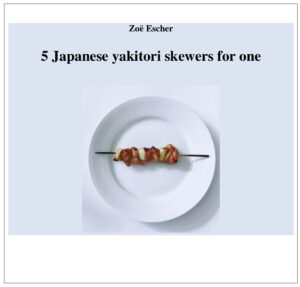
Mini ebook: 5 Japanese yakitori skewers for one

In Japan, there are several types of barbecue dishes, which are eaten all year.
Yakitori skewers, which most people have heard of are small grilled skewers with different kinds of meat, seafood and vegetables, the raw materials are marinated, prepared and cooked in a specific way, so that each skewer is a unique taste experience.

There is also another type of grilled dishes called Yakiniku.
These are restaurants that specialize in barbecue dishes where the guests cook the food themselves. Restaurants that are furnished in such a way that each party have their own grill.

In these restaurants, the menu consists of several different types of meat, seafood and vegetables cut into one centimeter thick slices.
Before the food is cooked on a hot grill, the party has the opportunity to season the raw materials with a little salt and other spices. After cooking the meat, seafood and vegetables they are eaten by dipping them in different kinds of tasty sauce.
Dining at a yakiniku restaurant often takes several hours, since you are not in a hurry and often sit and enjoy the food at your own pace.

Several people have asked me over the years how to make yakitori skewers.
I have written a mini e-book “5 Japanese yakitori skewers for one”. It is an e-book that explains step by step how to make tasty yakitori skewers using Japanese cooking techniques. Tasty barbecue skewers prepared with different kinds of meat and vegetables.

Read more about mini e-book: “5 Japanese yakitori skewers for one”.

Note: The e-book is also available for purchase on Amazon.
_
Zoë has lectured and held sushi courses for A. P. Moller – Maersk, Hugo Boss Nordic, Novo Nordisk, Novartis, Velux, Gorrissen Federspiel, Beierholm revision, Elbek & Vejrup and many more.
Why are onigiri so popular in Japan?

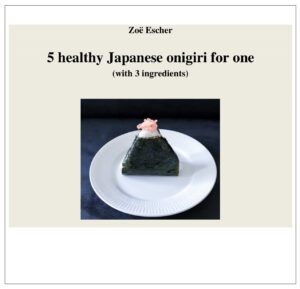
Ebook: 5 Japanese onigiri for one

In Japan, onigiri is such a popular dish that Japanese people wait for several hours to buy onigiri from some of the best restaurants in Tokyo.

Basically, onigiri consists of a rice triangle with a tasty filling and the rice triangle is wrapped in nori seaweed, nori seaweed that most people know from sushi.

There are several reasons why the Japanese like to wait for hours to buy the best onigiri.

In Japan, boiled rice is not just boiled rice. As with sushi, a virtue is made out of cooking rice to perfection. The quality of the cooked rice determines how good the onigiri tastes.

In Japan, there are restaurants with menus with up to 50 different onigiri with their very own unique filling. There are almost no limits to what fillings can be used for onigiri.

Just like with sushi, onigiri is made by hand. In Japan, restaurants have refined their techniques in such a way that customers line up to taste just their onigiri. They make onigiri that make the bird sing and send their customers to heaven.

In the mini e-book: 5 healthy Japanese onigiri for one, you learn step by step how to make tasty onigiri suitable for everyday use and lunch.

Note: The e-book is also available for purchase on Amazon.

_
Zoë has lectured and held sushi courses for A. P. Moller – Maersk, Hugo Boss Nordic, Novo Nordisk, Novartis, Velux, Gorrissen Federspiel, Beierholm revision, Elbek & Vejrup and many more.