_
Zoë has held sushi courses and cooking classes for A. P. Moller – Maersk, Hugo Boss Nordic, Novo Nordisk, Novartis, Velux, Gorrissen Federspiel, Beierholm revision, Elbek & Vejrup and many more.
Seaweed for sushi is a very healthy vegetable. In the world, seaweed is the vegetable that contains most vitamins and minerals.
The countries that produces the largest amount of seaweed for sushi are China, Korea and Japan. You can compare seaweed for sushi to crops like wheat or oats. The difference is that seaweed is a vegetable which ia grown on the sea bottom.
Seaweed produced in Japan, China and Korea has difference taste. This is because there are several different type of seaweed used for sushi.
In general, seaweed for sushi is a vegetable that is essential in Japanese cuisine.
_
Zoë has held sushi courses and cooking classes for A. P. Moller – Maersk, Hugo Boss Nordic, Novo Nordisk, Novartis, Velux, Gorrissen Federspiel, Beierholm revision, Elbek & Vejrup and many more.
Yes, and there are several reasons for that.
Japanese sushi basically consists only of rice and fish. When the food is so simple fewer additives have been used in the preparation of the sushi.
In Europe and especially Denmark there are many sushi restaurants that use different complement for their sushi. It may be mayonnaise in different shades and other tasty topping. Mayonnaise is a food that is not particularly healthy it adds more calories to the food.
At Sushi coursefor beginners the attendants learn the Japanese approach to sushi ie. to use Japanese ingredients, cooking techniques and hand techniques. Methods that you can use to make your favorite sushi rolls at home in your own kitchen.
_
Zoë has held sushi courses and cooking classes for A. P. Moller – Maersk, Hugo Boss Nordic, Novo Nordisk, Novartis, Velux, Gorrissen Federspiel, Beierholm revision, Elbek & Vejrup and many more.
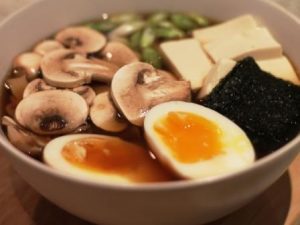
In Japan, noodles soup can be compared to Danish meatballs.
All Japanese chefs including sushi chef knows how to make a tasty noodle soup. From childbirth the Japanese learn that noodle soup is a dish that can be eaten all year long.
There is not only a kind of noodle soup. The selection is very big. Just like meat balls each noodle has their very own unique recipe for how to make the best fund from scratch.
However, there is of course a red thread in the noodle soups that are being made in Japan. There are differences between Japanese, Chinese and Vietnamese noodles, because there are different ingredients and flavors used to make soups.
_
Zoë has held sushi courses and cooking classes for A. P. Moller – Maersk, Hugo Boss Nordic, Novo Nordisk, Novartis, Velux, Gorrissen Federspiel, Beierholm revision, Elbek & Vejrup and many more.
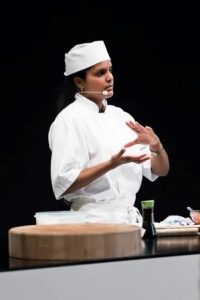
In 2016 I held the opening speech and opened the exhibition Formland Spring in the exhibition center Herning in Denmark. I was asked by exhibition center Herning if I was interested in making a speech where I talked about Japan.
I said yes of cause it is one my favorit topics.
I spoke about Japan, Japanese culture and design.
When I had declared the fair open Seido Taiko played Japanese drums.
At the opening, 49 from the press, 20 VIPs and 271 exhibitors attended.
Opening the fair and talking about Japan was a fantastic experience.
_
Zoë has lectured and held sushi courses for A. P. Moller – Maersk, Hugo Boss Nordic, Novo Nordisk, Novartis, Velux, Gorrissen Federspiel, Beierholm revision, Elbek & Vejrup and many more.
Sushi is a dish that is different from other dishes in Japanese cuisine. It is a dish where the shelf life is very short.
Sushi should be eaten the same day it was purchased and there are several reasons.
Raw fish included in sushi together have shelf life as beef Tatar. Since there will be more bacteria in the food the next day.
Avocado is a raw material that quickly turns brown and dull. Most people know what half an avocado looks like the next day if it is not stored in the “right” way.
The individual rice grains also change in taste. The next day, the individual rice grains will be harder to chew.
At the Sushi course for beginners you will learn how to make tasty sushi that you can enjoy for lunch and dinner.
_
Zoë has held sushi courses and cooking classes for A. P. Moller – Maersk, Hugo Boss Nordic, Novo Nordisk, Novartis, Velux, Gorrissen Federspiel, Beierholm revision, Elbek & Vejrup and many more.
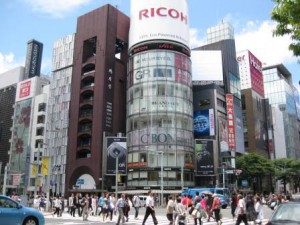
There are many different types of restaurants in Tokyo.
The most exclusive sushi restaurants in Tokyo are very different compared to European restaurants.
The size of a Japanese sushi restaurant can be very small. There are many Japanese restaurants that has only room for 6 – 15 people. There are several reasons for that.
Tokyo has 20 million citizens living in a very small geographic area. Besides the many people living in Tokyo there are also many restaurants, street food and shops. There is almost a restaurant on every street in Tokyo so the competition in the neighborhood is fierce.
There is also another factor which is that the Japanese do not compromise on the quality of food and service. Tokyo is the city of the world with the highest quality of food.
Every restaurant try their best to provide the best food and service. The competition between the restaurants are very fierce. In order for a restaurant to succeed the has to be good.
_
Zoë has lectured and held sushi courses for A. P. Moller – Maersk, Hugo Boss Nordic, Novo Nordisk, Novartis, Velux, Gorrissen Federspiel, Beierholm revision, Elbek & Vejrup and many more.
The classic Japanese aroma that characterizes Japanese cuisine is quite unique. There is no other country in the world that has something similar.
The Japanese aroma basically consists of seaweed and dried fish.
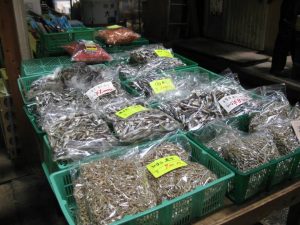
In Japan there are seaweed and dried fish in many varieties and qualities. However, not everyone is used to making the classic aroma. There are varieties of seaweed that are only suitable for sushi, some for salads, others to make a fund, etc. And this also applies to dried fish.
The picture shows several different types of dried fish. Small dried fish used only for certain Japanese dishes.
On the course Traditional Japanese cooking class for beginnerswe explore and work with different types of Japanese soy sauce all of which play an important role in preparing classic Japanese dishes.
_
Zoë has held sushi courses and cooking classes for A. P. Moller – Maersk, Hugo Boss Nordic, Novo Nordisk, Novartis, Velux, Gorrissen Federspiel, Beierholm revision, Elbek & Vejrup and many more.
Yes there is a very big difference between soy sauce.
In Japan, soy sauce is used as a spice it is a way of seasoning the dish food and give it the final finish.
In Japan, soy sauce is not just soy sauce. There are as many different kinds soy sauce just as many as the cheese shelf in an European supermarket. When the Japanese select a soy sauce they first look at the following,
Which dish should the soy sauce be used? What other spices are used to taste the dish? How powerful or mild is the dish?
This is because the Japanese want to use a soy sauce that highlights the right qualities without being dominant. It also means that it does matter which soy sauce is used for sushi.
_ Zoë has held sushi courses and cooking classes for A. P. Moller – Maersk, Hugo Boss Nordic, Novo Nordisk, Novartis, Velux, Gorrissen Federspiel, Beierholm revision, Elbek & Vejrup and many more.
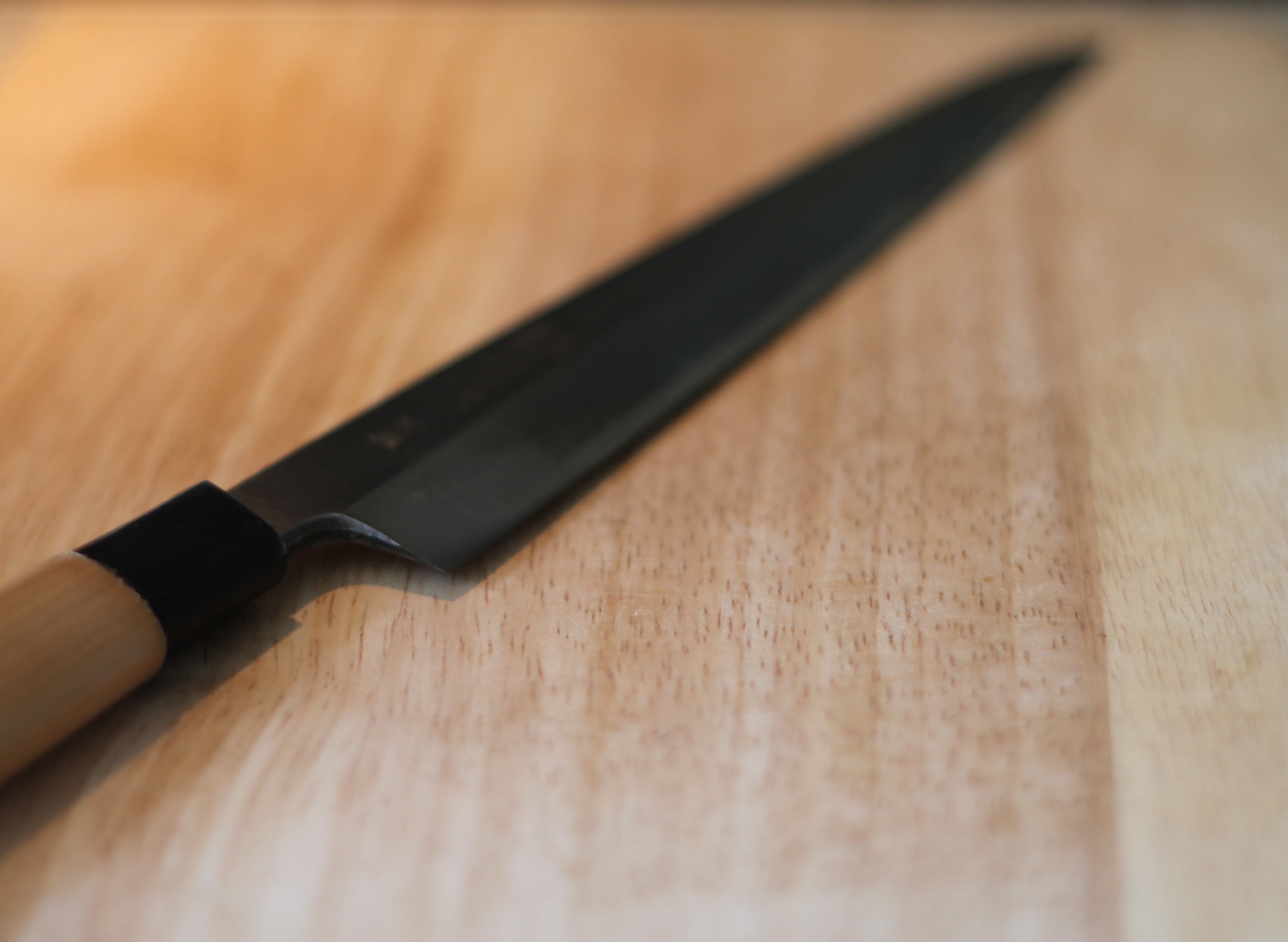
The best knife for sushi is a special knife called sushi knife. There are several types of knives but not all are equally good.
I prefer to use a good Japanese sushi knife. The Japanese have the best sushi knifes and cooking utensils designed for sushi. They do also have a huge knowledge about which knife is best for you.
The Japanese knife blade has a slope which is very important when you cut fish for sushi.
For those who do not know. I can taste if the sushi chef has used a Japanese sushi chef knife or a European knife.
_
Zoë has lectured and held sushi courses for A. P. Moller – Maersk, Hugo Boss Nordic, Novo Nordisk, Novartis, Velux, Gorrissen Federspiel, Accenture audit Elbek & Vejrup and many more. Gem
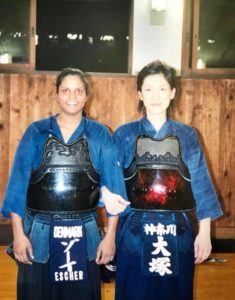 Practice with the national team coach of the Japanese kendo women’s team in kendo at Tokyo University in Tokyo in 2004.